Forbidden World Literature section
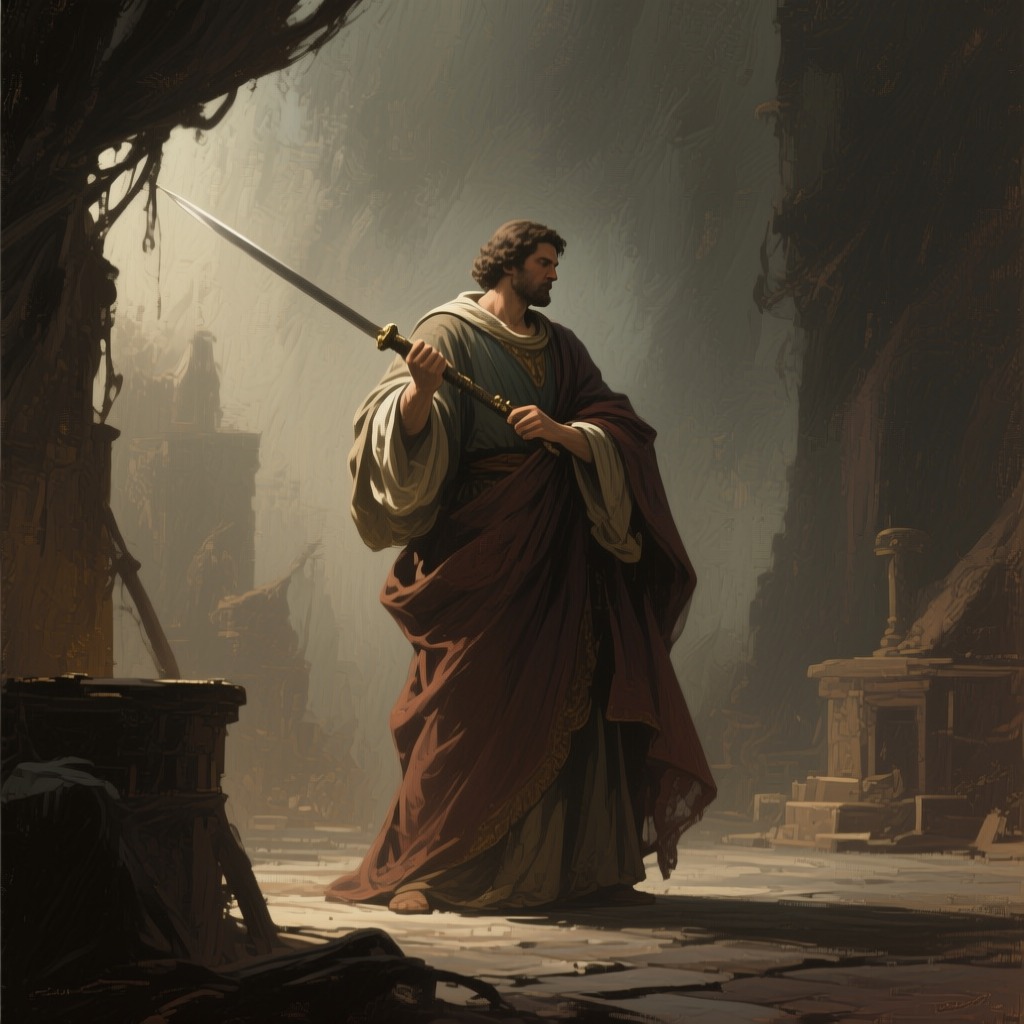
The Forbidden World Literature section is the innermost sanctum of the Hildegard Library at Ardua Hall, a space so restricted that only Aunt Lydia and a very few trusted individuals may enter. It is here, deep within the library's labyrinthine architecture, that Aunt Lydia keeps her personal selection of proscribed books—works such as Jane Eyre, Anna Karenina, Tess of the d'Urbervilles, Paradise Lost, and Lives of Girls and Women—each of which would cause a moral panic if discovered by the lower-ranking Supplicants. More crucially, the section houses another set of files, accessible only to a very few, which Aunt Lydia thinks of as "the secret histories of Gilead." These files contain the discreditable knowledge that forms the basis of her power: knowledge she has capitalized on, recognizing, as she puts it, that "every intelligence agency in the world has always known" that "knowledge is power, especially discreditable knowledge."
The Sanctum and Its Hidden Manuscript
Within this forbidden section, Aunt Lydia has created a private carrel where she writes the Ardua Hall Holograph, the manuscript that becomes her confession and her indictment of Gilead. She hides the nascent pages inside a hollow rectangle cut within a copy of Cardinal Newman's Apologia Pro Vita Sua: A Defence of One's Life, a weighty tome that no one reads anymore, Catholicism being considered heretical. The risk is immense: if someone were to discover her writing, she acknowledges, it would mean "a bullet in the head" for her. She has chosen her title advisedly, for what else is she doing but defending the life she has led—the life she tells herself she had no choice but to lead. The section is also where she stores her blue drawing ink and fountain pen, the tools of her dangerous craft.
The Threshold of Power
The Forbidden World Literature section is the final destination of Aunt Lydia's nocturnal pilgrimage through the library. She traverses the General section, where Supplicants grapple with their recently acquired literacy, then walks through the Reading Room, where the Bibles brood in the darkness of their locked boxes. She opens a locked door and threads her way through the Bloodlines Genealogical Archives with their classified files—the beating heart of Ardua Hall, where the true parentage of Gilead's elite is recorded. Only then does she reach her inner sanctum. The journey itself is a ritual of power, a passage through layers of restricted knowledge that culminates in the most forbidden space of all.
The Arsenal of Secrets
The Forbidden World Literature section is not merely a hiding place but an arsenal. The files Aunt Lydia keeps there contain the evidence of crimes committed by Commanders, Wives, and professionals—the blue folders for Wives, black for Commanders, grey for professionals—that she has accumulated over years of surveillance. These files, which she photographs and stores, become the ammunition she uses to manipulate the powerful and, ultimately, to engineer Gilead's collapse. The section is the physical embodiment of her philosophy: "All that festers is not gold, but it can be made profitable in non-monetary ways." It is here that she prepares the microdot that Nicole carries out of Gilead, the document cache that will initiate the Ba'al Purge and the regime's downfall.
The Site of Final Reckoning
In the final hours before the Eyes come for her, Aunt Lydia returns to the Forbidden World Literature section to complete her manuscript. She knows that the footsteps are approaching, that the knock will come between one breath and the next. She slots the pages back into Cardinal Newman and slides it onto her shelf, reflecting that "in my end is my beginning." The section, which has been the site of her secret writing and her accumulation of power, becomes the place where she prepares for her own death, a needleful of morphine at hand. The space that held the secrets of Gilead's corruption also holds the testament that will outlive her.